
Full-Grain vs Top-Grain Leather: Which Is Better? A Complete Buyer's Guide (2026)
When you're investing in a leather wallet, belt, backpack, or pair of boots, one question often comes up: Should you choose full-grain leather or top-grain leather? At first glance, the two seem almost identical. Both come from genuine animal hide, both are considered premium materials, and both are used by well-known leather brands.
However, the difference lies in how the leather is processed after the hide is removed. That single step affects everything—from durability and texture to aging, maintenance, and even how the leather feels in your hands years later.
If you're looking for the short answer, full-grain leather is generally the better choice because it preserves the strongest part of the hide and develops a rich patina over time. On the other hand, top-grain leather offers a smoother finish, requires less maintenance, and is often more affordable, making it a practical option for everyday use.
Let's take a closer look at what sets these two leather types apart.
Understanding Leather Grades
Not all genuine leather is created equal. Leather manufacturers grade hides based on the quality of the outer grain and the amount of processing involved. From highest to lowest quality, the common hierarchy looks like this:
- Full-Grain Leather
- Top-Grain Leather
- Genuine Leather
- Bonded Leather
A common misconception is that "genuine leather" automatically means premium quality. In reality, it simply means the product contains real leather. Full-grain and top-grain leather are also genuine leather—but they're made from much higher-quality sections of the hide.
Understanding this distinction helps you avoid paying premium prices for products that only use the marketing term "genuine leather."
What Is Full-Grain Leather?
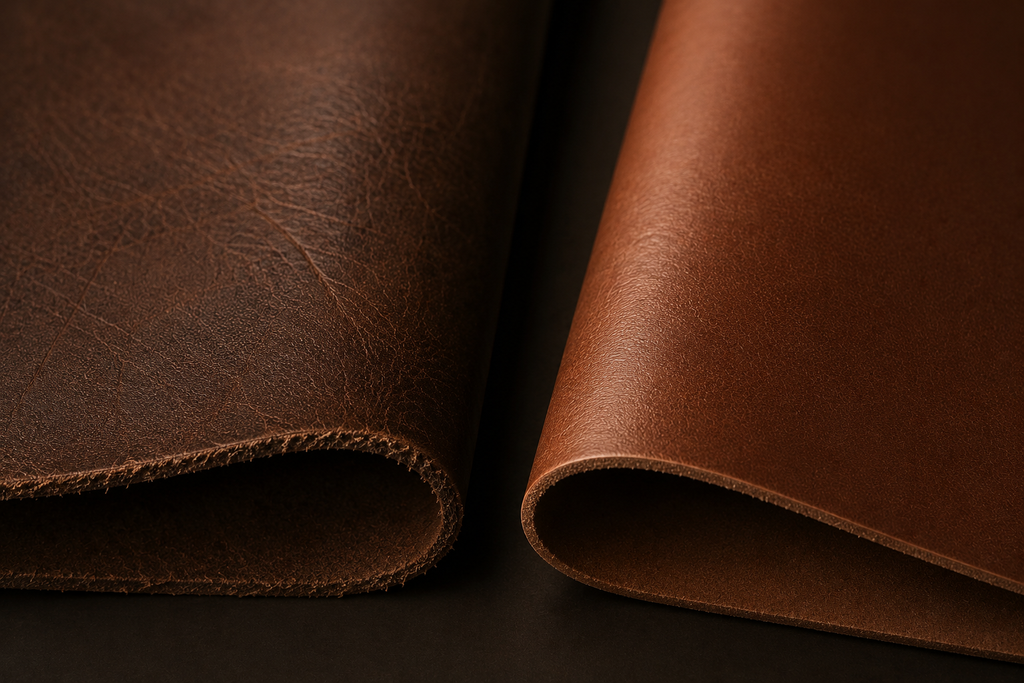
Full-grain leather is made from the outermost layer of the animal hide, where the leather fibers are the strongest and most tightly packed. Unlike other leather types, the natural grain isn't sanded, buffed, or corrected. As a result, the surface retains its original texture, including natural pores, wrinkles, and minor marks.
Those imperfections aren't defects—they're a sign that the leather hasn't been heavily altered.
One of the biggest reasons leather enthusiasts prefer full-grain leather is patina. With regular use, exposure to sunlight, natural oils from your hands, and everyday wear, the leather gradually develops a deeper color and a unique character. Rather than looking worn out, a well-maintained full-grain leather wallet or bag often looks better after several years than it did when it was new.
Because the grain remains intact, full-grain leather is also more breathable and resistant to cracking than heavily processed leather.
Why People Choose Full-Grain Leather
- Exceptional durability that can last for decades
- Develops a rich, natural patina with age
- Strong leather fibers provide excellent wear resistance
- Every piece has a unique grain pattern
- Ideal for premium belts, boots, wallets, and travel bags
The downside is its price. Since only the highest-quality hides qualify for full-grain leather, products made from it usually cost more. It also benefits from occasional conditioning to prevent the leather from drying out over time.
What Is Top-Grain Leather?
Top-grain leather also comes from the outer layer of the hide, but before it's finished, manufacturers lightly sand the surface to remove scars, insect bites, or other natural imperfections. A protective finish or pigment is then applied to create a more uniform appearance.
This extra processing gives top-grain leather a cleaner and smoother look, which is why it's commonly used in luxury handbags, office bags, furniture, and fashion accessories.
Many buyers assume sanding makes the leather poor quality. That's not true. Top-grain leather still ranks among the highest-quality leathers available. It simply trades a small amount of natural strength for a more refined appearance and easier maintenance.
Because of its protective coating, top-grain leather is generally more resistant to stains and moisture than untreated full-grain leather. It's also softer straight out of the box, so there's little break-in period.
Why Buyers Prefer Top-Grain Leather
- Smooth, consistent finish
- Softer feel from day one
- Easier to clean and maintain
- Better resistance to everyday stains
- Usually more affordable than full-grain leather
The trade-off is that top-grain leather doesn't develop the same rich patina. While it ages well, it tends to maintain its original appearance instead of gaining the character that many leather enthusiasts appreciate.
Full-Grain vs Top-Grain Leather: Quick Comparison
|
Feature |
Full-Grain Leather |
Top-Grain Leather |
|
Leather Quality |
Highest available |
Premium |
|
Surface |
Natural, untouched grain |
Sanded and finished |
|
Durability |
Excellent |
Very Good |
|
Patina |
Develops naturally |
Limited |
|
Scratch Resistance |
Scratches blend into the patina over time |
Better resistance to visible scratches initially |
|
Breathability |
Higher |
Slightly lower |
|
Maintenance |
Needs occasional conditioning |
Easier to maintain |
|
Best For |
Boots, belts, wallets, travel bags |
Handbags, furniture, office bags |
|
Price |
Premium |
Slightly more affordable |
Which One Should You Choose?
If your goal is to buy a leather product that can last for decades and improve with age, full-grain leather is difficult to beat. Its natural grain, exceptional durability, and ability to develop a beautiful patina make it the preferred choice for buyers who value craftsmanship over perfection.
However, if you prefer a sleek appearance, easier care, and a lower upfront cost without compromising on quality, top-grain leather remains an excellent investment. It's the reason many premium fashion brands rely on it for products designed to balance luxury with practicality.
The right choice ultimately depends on how you plan to use the product—and that's exactly what we'll explore next.
Which Leather Lasts Longer?
If longevity is your top priority, full-grain leather is the clear winner. Because its natural grain remains intact, the leather retains the strongest fiber structure of the hide. These dense fibers help it resist stretching, tearing, and everyday wear better than heavily processed leather.
With proper care, a full-grain leather belt, wallet, or pair of boots can easily last 20 years or more. In many cases, these products become family heirlooms rather than items that need frequent replacement.
Top-grain leather is still highly durable, but the light sanding process removes a small portion of the strongest outer fibers. While this doesn't make it weak, it does slightly reduce its long-term durability compared to full-grain leather.
Winner: Full-Grain Leather
Which Leather Is Better for Different Products?
Choosing the right leather also depends on what you're buying.
Wallets
A full-grain leather wallet develops a beautiful patina and becomes more attractive with daily use. If you prefer a clean, polished look that stays consistent over time, top-grain leather is an excellent alternative.
Belts
Belts experience constant bending and stretching. Full-grain leather handles this stress exceptionally well, making it the preferred choice for everyday and formal belts.
Boots
Work boots, hiking boots, and heritage footwear are often made from full-grain leather because of its durability, breathability, and ability to withstand harsh conditions.
Bags
For rugged travel bags and messenger bags, full-grain leather is hard to beat. Luxury handbags and office bags, however, frequently use top-grain leather because of its refined finish and softer feel.
Furniture
Top-grain leather is commonly used in sofas and office chairs. Its protective finish makes it easier to clean and better suited for homes with children or pets.
Full-Grain vs Top-Grain Leather: Which Offers Better Value?
Many buyers assume the more expensive option is always the better investment. That's not necessarily true.
If you're purchasing a product you'll use every day for many years—such as a belt, wallet, boots, or travel bag—paying more for full-grain leather often makes sense because of its exceptional lifespan.
However, if appearance, easy maintenance, and affordability matter more than developing a natural patina, top-grain leather offers outstanding value. It delivers premium quality at a slightly lower price while requiring less upkeep.
In short, buy for your lifestyle, not just the label.
How to Identify Genuine Full-Grain Leather
Marketing terms can be confusing, and not every product labeled "premium leather" is made from full-grain leather. Before making a purchase, keep these tips in mind:
- Look for products that clearly state "Full-Grain Leather" in the specifications.
- Expect slight variations in texture and natural grain—uniform perfection usually indicates surface correction.
- Full-grain leather has a rich, natural leather aroma rather than a strong chemical smell.
- The leather should feel firm yet flexible, not overly stiff or plastic-like.
- If a product only says "Genuine Leather," it doesn't automatically mean it's full-grain or top-grain.
Taking a few minutes to check these details can help you avoid paying premium prices for lower-grade leather.
Common Myths About Leather
Myth 1: Top-Grain Leather Isn't Real Leather
False. Top-grain leather is 100% genuine leather. The only difference is that its surface has been lightly sanded and finished to create a smoother appearance.
Myth 2: Scratches Mean Poor Quality
Not always. Minor scratches on full-grain leather are completely normal and often become less noticeable as the leather develops its natural patina.
Myth 3: Genuine Leather Is the Best Grade
This is one of the biggest misconceptions. "Genuine leather" is a broad marketing term and doesn't indicate the highest quality. Full-grain and top-grain leather are both genuine leather, but they are superior in quality and longevity.
Frequently Asked Questions
Is full-grain leather better than top-grain leather?
Yes. Full-grain leather is widely regarded as the highest-quality leather because it preserves the hide's natural grain, making it stronger, more breathable, and capable of developing a beautiful patina over time.
Does top-grain leather crack?
High-quality top-grain leather is resistant to cracking when cared for properly. Regular cleaning and occasional conditioning can significantly extend its lifespan.
Which leather is best for everyday use?
If you want maximum durability, choose full-grain leather. If you prefer easier maintenance and a smoother finish, top-grain leather is a practical everyday choice.
Why is full-grain leather more expensive?
Only the highest-quality hides are suitable for full-grain leather. Since the natural grain isn't corrected or sanded, manufacturers must select hides with fewer imperfections, increasing production costs.
Final Verdict
When comparing full-grain vs top-grain leather, there isn't a universal winner—only the right choice for your needs.
Choose full-grain leather if you value durability, craftsmanship, and a leather product that develops character over time. It's the best option for buyers looking for long-term performance and timeless appeal.
Choose top-grain leather if you prefer a smoother finish, easier maintenance, and premium quality at a more accessible price. It's an excellent choice for handbags, office bags, furniture, and accessories that prioritize style and convenience.
In the end, both are significantly better than lower leather grades like bonded or standard genuine leather. The key is understanding how each type is made and selecting the one that matches your lifestyle, budget, and expectations. When you make an informed choice, you're not just buying leather—you're investing in a product that can serve you well for years to come.
