
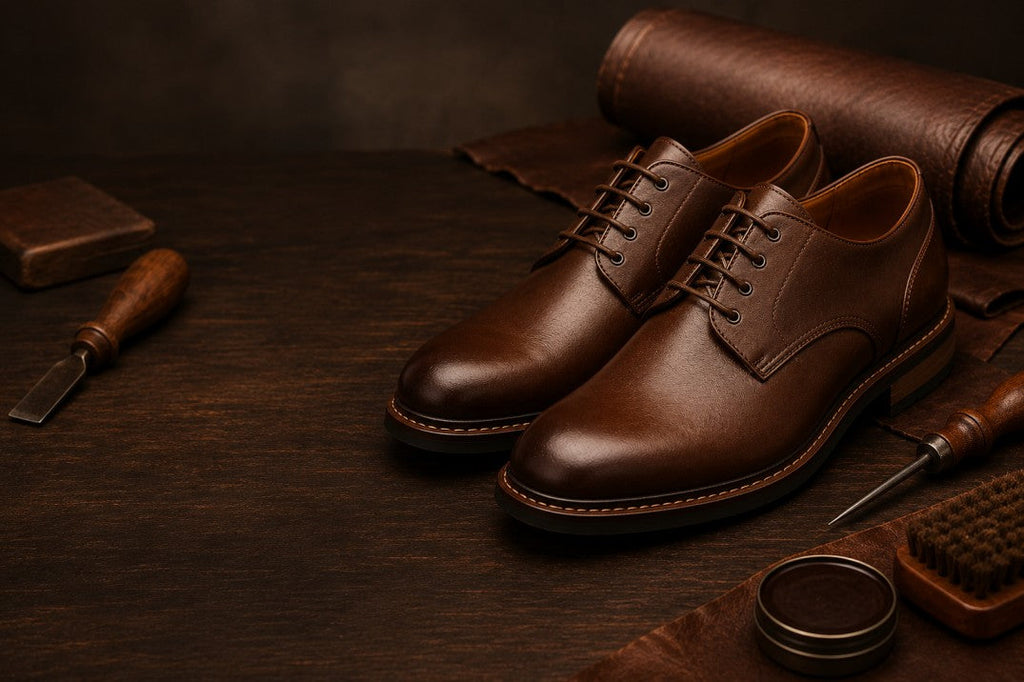
First Pair of Premium Leather Shoes? A Complete Beginner's Buying Guide
Buying your first pair of premium leather shoes is exciting, but it can also feel overwhelming. With terms like full-grain leather, Goodyear welt, Blake stitch, and genuine leather appearing in product descriptions, it's easy to wonder which features actually matter and which are simply marketing buzzwords.
The truth is, a well-made pair of leather shoes isn't just another addition to your wardrobe—it's an investment in comfort, durability, and timeless style. Unlike fast-fashion footwear that often needs replacing within a year or two, quality leather shoes can serve you for many years when chosen wisely and cared for properly.
If you're buying premium leather shoes for the first time, this guide will help you understand what to look for, what to avoid, and how to make a purchase you'll be happy with long after the first wear.
Why It Matters
Your first premium leather shoes often shape your expectations of leather footwear. Choosing the right pair means enjoying better comfort, improved durability, and footwear that becomes more comfortable over time.
On the other hand, buying the wrong pair—whether it's made from lower-grade leather or poor construction—can leave you disappointed and believing premium shoes aren't worth the investment.
Learning a few basics before you buy can help you avoid costly mistakes and choose shoes that offer real long-term value.
Premium Leather Shoes vs Budget Leather Shoes
|
Feature |
Premium Leather Shoes |
Budget Leather Shoes |
|
Leather Quality |
Full-grain or top-grain leather |
Genuine, bonded, or synthetic leather |
|
Construction |
Handcrafted with stitched construction |
Mostly glued assembly |
|
Comfort |
Gradually molds to your feet |
Limited break-in and flexibility |
|
Lifespan |
Can last for many years with proper care |
Usually needs replacement sooner |
|
Repairability |
Often resoleable and repairable |
Rarely repairable |
|
Long-Term Value |
Higher initial investment, lower cost over time |
Lower upfront cost but frequent replacement |
1. Understand the Different Types of Leather
One of the biggest mistakes first-time buyers make is assuming that every shoe labeled "leather" offers the same quality. In reality, the type of leather used has a significant impact on durability, comfort, and appearance.
Here's what the common terms actually mean:
|
Leather Type |
What It Means |
|
Full-Grain Leather |
The highest-quality leather that retains the natural grain, making it exceptionally durable and capable of developing a beautiful patina over time. |
|
Top-Grain Leather |
Slightly refined for a smoother finish while maintaining excellent durability and a premium appearance. |
|
Genuine Leather |
Real leather, but generally made from lower layers of the hide. It offers decent quality but may not last as long as full-grain or top-grain leather. |
|
Bonded Leather |
Made from leather scraps mixed with adhesives and synthetic materials. Less durable and more prone to wear. |
|
PU or Faux Leather |
Artificial material designed to imitate leather without using animal hide. |
If your budget allows, full-grain or top-grain leather offers the best long-term value.
2. Choose the Right Shoe for Your Lifestyle
Before focusing on colors or brands, think about how you'll actually wear your shoes.
Ask yourself:
- Will you wear them daily for work?
- Do you need them mainly for weddings and formal events?
- Are you looking for something that works with both jeans and business attire?
- Do you spend long hours standing or walking?
Matching your purchase to your lifestyle helps ensure your first premium leather shoes become a regular part of your wardrobe rather than sitting unused.
For most first-time buyers, classic styles provide the greatest versatility.
Some excellent choices include:
- Oxford shoes for formal occasions
- Derby shoes for business and smart casual wear
- Leather loafers for everyday versatility
- Chelsea boots for both casual and semi-formal outfits
Choosing a timeless design also means your shoes are less likely to go out of style.
3. Don't Judge Shoes by Appearance Alone
A polished finish and premium branding can make almost any shoe look luxurious online.
Instead of focusing only on appearance, inspect the details that actually determine quality.
Look closely at:
- Even, consistent stitching
- Smooth leather with natural grain
- Firm heel attachment
- Neatly finished edges
- High-quality lining
- Well-shaped toe box
These details often reveal far more about a shoe's quality than glossy marketing photos.
If you're shopping online, zoom into the product images and read customer reviews that discuss comfort, leather quality, and long-term durability rather than just appearance.
4. Pay Attention to Construction Methods
The way a shoe is assembled has a major influence on how long it lasts.
Many premium leather shoes use traditional construction methods that create a stronger bond between the upper and the sole.
Some of the most respected methods include:
Goodyear Welt Construction
A welt—a strip of leather stitched around the edge of the shoe—connects the upper to the sole. This construction is highly durable and allows the shoe to be resoled multiple times, extending its lifespan significantly.
Blake Stitch Construction
Blake-stitched shoes use a direct stitch connecting the sole to the upper. They are typically lighter, more flexible, and slimmer while still offering excellent durability.
Cemented Construction
Budget footwear often relies primarily on adhesives rather than stitching. While this method keeps manufacturing costs low, glued soles are generally harder to repair and may separate after prolonged use.
Understanding these construction methods helps you evaluate a shoe based on craftsmanship rather than price alone.
5. Prioritize Comfort Over Immediate Softness
Many first-time buyers assume that the softest shoe in the store is automatically the most comfortable.
In reality, premium leather behaves differently.
High-quality leather gradually adapts to your foot shape through a natural break-in process. During the first few wears, the leather softens slightly while maintaining the support needed for long-term comfort.
A shoe that feels slightly firm—but fits correctly—often becomes significantly more comfortable after a short break-in period.
However, your shoes should never feel painfully tight. Premium leather stretches only slightly, so choosing the correct size from the beginning is essential.
6. Get the Right Fit from Day One
Even the finest leather shoes won't feel comfortable if they don't fit properly.
When trying on premium leather shoes, make sure there's enough room for your toes to move naturally without sliding forward. Your heel should stay securely in place, and the widest part of your foot should align with the widest part of the shoe.
Quick Fit Checklist
- Try shoes on later in the day when your feet are slightly larger.
- Wear the same type of socks you plan to use regularly.
- Walk around for a few minutes before making a decision.
- Avoid buying shoes that feel painfully tight, hoping they'll stretch significantly.
A properly fitted leather shoe should feel snug but never restrictive.
7. Don't Overlook the Inner Lining
While buyers often focus on the exterior leather, the inner lining plays a major role in comfort and durability.
Premium leather linings are naturally breathable, helping regulate temperature and absorb moisture during long hours of wear. They also reduce friction, making the shoes more comfortable over time.
By contrast, synthetic linings can trap heat and moisture, leading to discomfort, unpleasant odors, and faster interior wear.
When comparing two similar pairs, a leather-lined shoe is often the better long-term investment.
8. Learn Basic Leather Care Early
One of the biggest advantages of premium leather shoes is that they can look great for years—but only if they're cared for properly.
Fortunately, maintaining leather footwear doesn't require expensive products or complicated routines.
Simple Care Tips
- Wipe away dust after each wear with a soft cloth.
- Use a quality leather conditioner every few months to keep the leather hydrated.
- Insert cedar shoe trees to help maintain shape and absorb moisture.
- Rotate between pairs instead of wearing the same shoes every day.
- Store shoes in a cool, dry place away from direct sunlight.
A few minutes of regular care can significantly extend the life of your shoes while preserving their appearance.
Common Mistakes First-Time Buyers Make
Buying your first premium leather shoes is easier when you know what to avoid.
Buying Based Only on Price
The most expensive shoe isn't always the best. Focus on leather quality, construction, comfort, and craftsmanship rather than branding alone.
Ignoring Leather Type
Many buyers assume all leather is equal. Understanding the difference between full-grain, top-grain, genuine, and bonded leather helps you make a smarter investment.
Choosing Fashion Over Versatility
If you're buying just one pair, select a timeless style in a classic color such as black or dark brown. It will pair well with both formal and smart-casual outfits.
Skipping Regular Maintenance
Even premium leather needs occasional cleaning and conditioning. Neglecting basic care can shorten the lifespan of otherwise excellent shoes.
Before You Buy: A Quick Checklist
Use this checklist before purchasing your first pair of premium leather shoes:
✔ Full-grain or top-grain leather upper
✔ Leather lining for breathability
✔ Strong, even stitching throughout
✔ Comfortable fit with slight break-in room
✔ Durable stitched construction when possible
✔ Reputable brand with transparent material descriptions
✔ Classic design suitable for multiple occasions
If a pair checks most of these boxes, you're likely making a worthwhile investment.
Frequently Asked Questions
Are premium leather shoes worth the higher price?
Yes. Although they cost more initially, premium leather shoes often last much longer than lower-quality alternatives. Their durability, repairability, and timeless design make them a better long-term value.
What is the best leather for first-time buyers?
Full-grain leather is generally considered the best choice because it's highly durable, breathable, and develops a rich patina over time. Top-grain leather is another excellent option if you prefer a smoother finish.
How long do premium leather shoes last?
With proper care, a well-made pair of premium leather shoes can last for many years. Regular cleaning, conditioning, and occasional resoling can significantly extend their lifespan.
Should I buy black or brown leather shoes first?
If you mainly wear formal business attire, black leather shoes are the most versatile choice. If your wardrobe leans toward smart casual or business casual, dark brown shoes offer excellent flexibility.
Final Thoughts
Buying your first pair of premium leather shoes is about more than choosing an attractive design. Understanding leather quality, construction methods, proper fit, and basic maintenance helps you make an informed decision that pays off for years to come.
Instead of chasing trends or focusing solely on price, invest in craftsmanship, quality materials, and timeless style. A well-made pair of leather shoes doesn't just complete your outfit—it becomes more comfortable with every wear, develops character over time, and offers lasting value that fast-fashion footwear rarely delivers.
Whether you're purchasing shoes for work, special occasions, or everyday elegance, starting with the right pair will make all the difference.
