
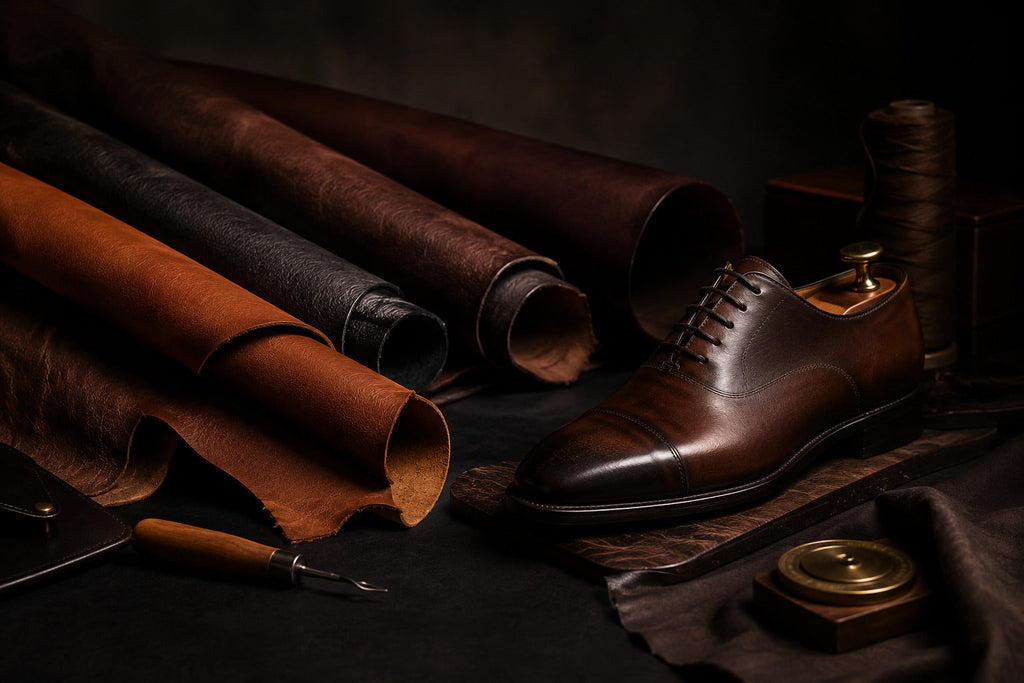
How Premium Leather Is Selected for High-Quality Shoes: A Complete Guide to Leather Selection
When people admire a pair of premium leather shoes, they often notice the elegant finish, polished appearance, or refined craftsmanship. However, what truly determines the quality of the shoes begins long before the stitching, sole construction, or final polish. It starts with one of the most important decisions in shoemaking—selecting the right leather.
The quality of leather directly influences how comfortable, durable, breathable, and long-lasting a pair of shoes will be. Not every leather hide is suitable for premium footwear, and experienced manufacturers carefully evaluate every piece before it becomes part of a finished shoe.
If you've ever wondered how premium leather is selected for high-quality shoes, this guide explains the complete process—from choosing the right hides to evaluating leather quality and why careful selection matters for long-term performance.
Why Leather Selection Matters
Leather is the foundation of every premium shoe. Even the finest craftsmanship cannot compensate for poor-quality leather.
Selecting high-grade leather ensures that shoes:
- Last significantly longer
- Develop a beautiful natural patina
- Remain breathable and comfortable
- Resist cracking and premature wear
- Maintain their shape over time
In contrast, lower-quality leather may initially look attractive but often loses its appearance, flexibility, and durability after regular use.
Simply put, exceptional shoes begin with exceptional leather.
Premium Leather vs Lower-Quality Leather
|
Feature |
Premium Leather |
Lower-Quality Leather |
|
Raw Material |
Carefully selected hides |
Mixed or lower-grade hides |
|
Surface |
Natural grain with minimal imperfections |
Sanded or heavily corrected |
|
Durability |
Excellent |
Moderate to Low |
|
Breathability |
High |
Limited |
|
Aging |
Develops rich patina |
Often peels or cracks |
|
Comfort |
Softens naturally over time |
May remain stiff or deteriorate quickly |
1. Selecting the Right Animal Hide
The first step in producing premium leather shoes is choosing high-quality animal hides.
Most premium leather footwear is crafted from cowhide because it offers an ideal balance of durability, flexibility, and comfort. Depending on the desired finish, manufacturers may also use calfskin, buffalo leather, or other specialty leathers.
During selection, leather experts inspect every hide for:
- Natural texture
- Thickness consistency
- Fiber density
- Minimal scars
- Limited insect bites
- Few stretch marks
Only hides meeting strict quality standards move to the tanning process.
The better the raw hide, the better the finished leather.
2. Inspecting the Grain Quality
One of the most important characteristics of premium leather is its grain.
The grain refers to the outermost surface of the hide where the strongest fibers are found.
Experienced inspectors examine the grain to ensure it has:
- Natural texture
- Uniform appearance
- Tight fiber structure
- Minimal defects
- Healthy flexibility
High-quality grain provides greater strength while allowing leather to breathe naturally.
This is one reason why full-grain leather remains the preferred choice for luxury footwear.
3. Choosing the Right Leather Grade
Not all leather is created equal.
After inspection, hides are classified into different grades based on their quality.
Common Leather Grades
|
Leather Grade |
Characteristics |
|
Full-Grain Leather |
Highest quality with natural grain intact |
|
Top-Grain Leather |
Slightly refined for smoother appearance |
|
Genuine Leather |
Lower layers of the hide with moderate durability |
|
Bonded Leather |
Leather scraps combined with synthetic materials |
|
Faux Leather |
Artificial material that mimics leather |
For premium shoes, manufacturers typically prioritize full-grain leather because it offers exceptional durability, breathability, and develops a rich patina with age.
Top-grain leather is another excellent choice for those who prefer a smoother finish while maintaining premium quality.
4. Evaluating Leather Thickness
Thickness plays an important role in both comfort and durability.
Leather that is too thin may stretch excessively or wear out quickly, while overly thick leather can feel stiff and uncomfortable.
Manufacturers carefully select leather with balanced thickness depending on the shoe style.
For example:
- Formal dress shoes often use slightly thinner leather for elegance.
- Boots generally require thicker leather for added durability.
- Loafers need flexible leather for everyday comfort.
Finding the right balance ensures long-lasting performance without sacrificing comfort.
5. Checking Leather Flexibility
Before leather is approved for production, it undergoes flexibility testing.
The leather is gently bent and folded to observe how it reacts.
Premium leather should:
- Flex smoothly
- Return to its original shape
- Show no deep wrinkles
- Resist cracking
This flexibility allows leather shoes to move naturally with your feet while maintaining their structure over years of wear.
6. The Importance of Tanning
Even the finest raw hide requires proper tanning.
Tanning transforms raw animal hide into durable leather that resists moisture, bacteria, and decomposition.
Two common tanning methods include:
Vegetable Tanning
- Uses natural plant extracts
- Produces rich character
- Develops beautiful patina
- Environmentally friendly
- Takes longer to complete
Chrome Tanning
- Faster production process
- Produces softer leather
- Excellent color consistency
- Common in modern footwear
Many premium shoe manufacturers choose tanning methods based on the intended design, durability, and finish.
7. Inspecting Surface Imperfections
Premium leather doesn't need to be completely flawless.
In fact, minor natural markings often indicate genuine high-quality leather.
Inspectors evaluate the leather for:
- Deep scars
- Large wrinkles
- Excessive blemishes
- Weak fiber areas
- Uneven coloration
Natural characteristics are acceptable, but structural defects are rejected.
This careful inspection ensures consistent quality throughout the finished shoe.
8. Testing Color Absorption
Premium leather accepts dyes differently from lower-quality leather.
Manufacturers test how evenly the leather absorbs color before final finishing.
High-quality leather produces:
- Rich color depth
- Uniform finish
- Better resistance to fading
- Long-lasting appearance
Even after years of wear, quality leather often maintains its elegance with proper care.
9. Matching Leather to Shoe Type
Different shoe styles require different leather characteristics.
For example:
|
Shoe Type |
Preferred Leather Characteristics |
|
Oxford Shoes |
Smooth, refined full-grain leather |
|
Derby Shoes |
Durable yet flexible leather |
|
Loafers |
Soft, lightweight leather |
|
Chelsea Boots |
Slightly thicker premium leather |
|
Dress Boots |
Strong full-grain leather with firm structure |
Selecting leather based on the shoe's intended use improves both comfort and longevity.
10. Final Quality Inspection
Before production begins, every leather batch undergoes one final inspection.
Experts check for:
- Uniform texture
- Color consistency
- Thickness accuracy
- Surface quality
- Flexibility
- Moisture content
- Overall durability
Only leather that passes every stage moves forward for cutting and handcrafted shoemaking.
This attention to detail is one reason premium leather shoes maintain their reputation for quality.
Signs of Premium Leather in Finished Shoes
If you're shopping for high-quality leather shoes, look for these indicators:
✔ Natural grain texture
✔ Soft yet supportive feel
✔ Rich, even color
✔ Smooth leather edges
✔ Minimal artificial coating
✔ Pleasant natural leather aroma
✔ Fine stitching and craftsmanship
These characteristics usually indicate that quality leather was carefully selected from the beginning.
Common Mistakes When Evaluating Leather Quality
Many buyers mistakenly judge leather by appearance alone.
Avoid these common misconceptions:
Assuming Shiny Means Better
A glossy finish often comes from heavy coatings rather than superior leather.
Believing "Genuine Leather" Is Premium
Although genuine leather is real leather, it generally ranks below full-grain and top-grain leather in quality and durability.
Ignoring Grain Texture
Natural grain provides valuable clues about leather quality.
Focusing Only on Brand Names
Even reputable brands produce products across different quality levels. Always examine the materials, not just the label.
Before Buying Premium Leather Shoes: A Quick Checklist
Use this checklist when shopping:
✔ Full-grain or top-grain leather
✔ Natural grain visible
✔ Smooth, consistent finish
✔ Strong stitching
✔ Leather lining
✔ Durable construction
✔ Trusted craftsmanship
✔ Comfortable fit
If most of these boxes are checked, you're likely investing in genuine premium leather footwear.
Frequently Asked Questions
How is premium leather different from regular leather?
Premium leather comes from carefully selected hides with stronger natural fibers, fewer imperfections, and superior durability. Lower-grade leather often undergoes heavy correction or uses lower layers of the hide.
Why is full-grain leather considered the best?
Full-grain leather retains the strongest outer layer of the hide, making it exceptionally durable, breathable, and capable of developing a beautiful patina over time.
Does premium leather last longer?
Yes. When properly cared for, premium leather shoes can last for many years because high-quality leather resists cracking, stretching, and excessive wear better than lower-grade materials.
Can natural marks appear on premium leather?
Yes. Small natural variations in texture or grain are normal and often indicate authentic leather rather than heavily processed material.
Final Thoughts
Selecting premium leather is one of the most important stages in creating high-quality shoes. Every step—from choosing the right hide and inspecting the natural grain to evaluating flexibility, thickness, and tanning quality—directly affects the comfort, durability, and appearance of the finished footwear.
For consumers, understanding how premium leather is selected makes it easier to recognize genuine craftsmanship and make informed purchasing decisions. Instead of being influenced by marketing terms alone, focus on leather quality, construction, and attention to detail.
A carefully selected piece of premium leather doesn't just create a beautiful shoe—it creates footwear that becomes more comfortable over time, ages gracefully, and delivers exceptional value for years to come.
